Views: 7
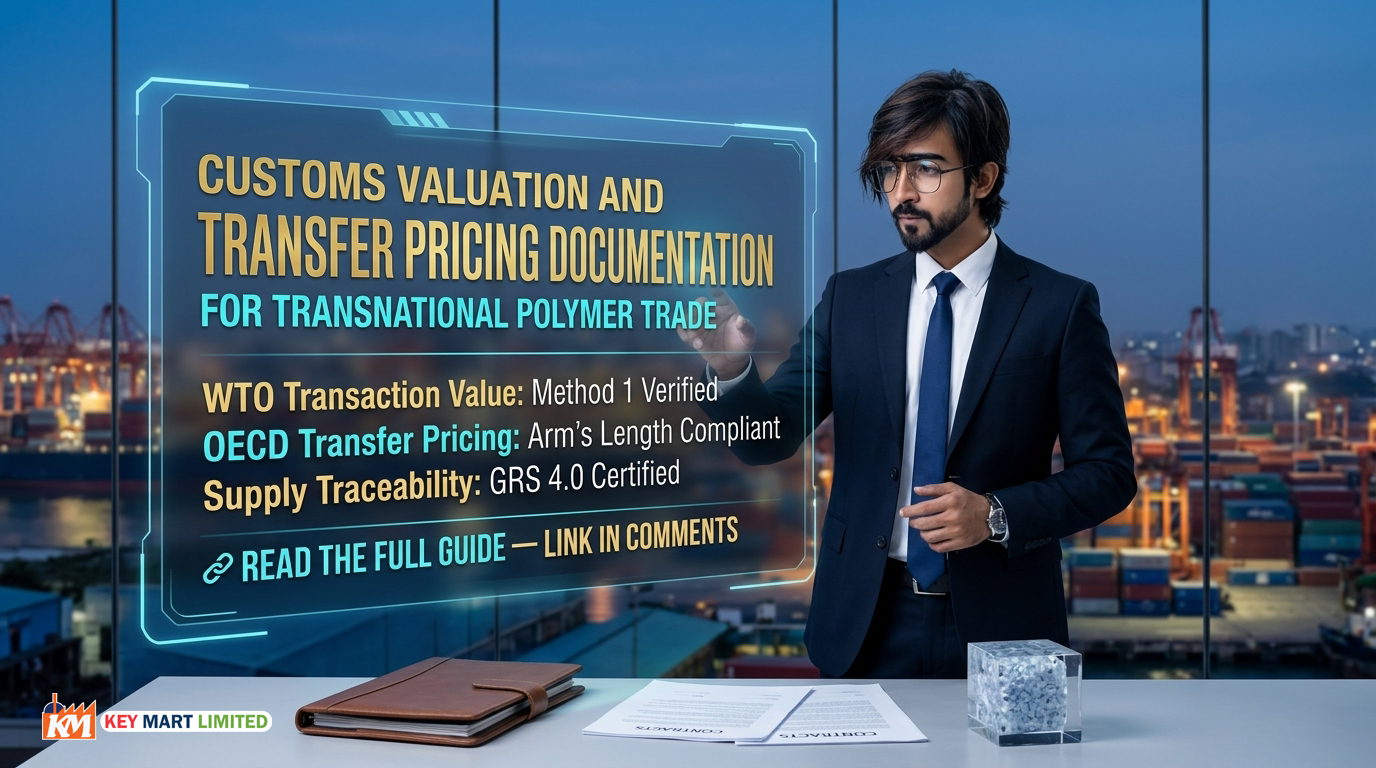
In transnational polymer trade, corporate procurement directors, tax counsels, and supply chain officers managing high-volume cross-border transactions face intense regulatory scrutiny. When importing recycled Polyethylene Terephthalate (pet flakes) under multi-national contracts, intercompany pricing structures must satisfy two competing global authorities: tax administrations enforcing OECD transfer pricing rules and customs authorities applying WTO valuation agreements.
While corporate tax authorities focus on preventing profit erosion by scrutinizing arm’s length margins, customs agencies focus on preventing duty undervaluation.
Navigating this intersection requires comprehensive rPET customs valuation documentation that reconciles the transaction value method with corporate transfer pricing studies.
For corporate entities sourcing large-scale feedstock under long-term supply agreements, discrepancies between declared customs values and year-end transfer pricing adjustments can trigger severe audit penalties, retrospective duty assessments, and supply chain delays.
This legal and financial guide examines the mechanics of customs valuation for transnational polymer contracts, outlines transfer pricing alignment protocols under OECD guidelines, and demonstrates how Key Mart Limited delivers transparent, audit-ready trade documentation for multinational buyers.
1. Reconciling Customs Valuation with OECD Transfer Pricing Rules
Cross-border shipments of rPET feedstock (HS Code 3915.90.00) between related entities or under long-term multinational framework contracts operate under two distinct regulatory standards:
Multinational Contract Execution ➔ Transaction Value Assessment (WTO Method 1) ➔ Intercompany Transfer Pricing Analysis (CUP / TNMM) ➔ Reconciled Documentation Package ➔ Audit-Proof Global Customs Clearance
A. WTO Customs Valuation: Transaction Value (Method 1)
Under the WTO Customs Valuation Agreement, the primary basis for customs value is the Transaction Value—the price actually paid or payable for the goods when sold for export:
-
Relationship Influence Test: If the buyer and seller are related entities, customs authorities evaluate whether the relationship influenced the price (Article 1.2).
-
Test Values: Importers must demonstrate that the declared unit price closely approximates the transaction value of identical or similar pet flakes sold to unrelated global buyers.
B. OECD Transfer Pricing Methodologies
Corporate tax frameworks mandate that intercompany pricing reflect the Arm’s Length Principle:
-
Comparable Uncontrolled Price (CUP) Method: Benchmarks the contract price directly against public ICIS/Platts South Asian rPET spot indices.
-
Transactional Net Margin Method (TNMM): Establishes an operating margin range for the purchasing or distributing entity, requiring documentation proving that cross-border polymer procurement prices align with functional risk profiles.
Read More: A Step-by-Step Guide to Importing PET Flakes from Bangladesh via Chittagong Port
Customs Valuation & Transfer Pricing Compliance Matrix
| Regulatory Component | WTO / US CBP / EU Customs Standard | OECD Transfer Pricing Guidelines | Risk Mitigation Strategy (Key Mart Standard) |
| Primary Valuation Basis | Transaction Value (Price Paid/Payable) | Arm’s Length Principle (CUP / TNMM) | Harmonized contract pricing with market indices |
| Year-End Price Adjustments | Risk of duty underpayment/overpayment | Post-closing profitability balancing | Pre-agreed transfer pricing adjustment clauses |
| Incoterms Alignment | FOB / CFR / CIF explicit cost breakdown | Freight & insurance risk allocation | Itemized ocean freight & terminal handling data |
| Assists & Tooling Value | Must be apportioned and declared | Factored into CAPEX & depreciation | Transparent declaration of processing assets |
| Physical Feedstock Verification | Lab Certificate of Analysis (CoA) | Functional analysis of material grade | Batch-specific Intrinsic Viscosity (IV) & PVC CoAs |
| Origin & Sustainability Proof | Rules of Origin (REX / GSP / US 7501) | ESG value-chain attribution | GRS 4.0 Transaction Certificates (TC) |
2. Managing Year-End Transfer Pricing Adjustments and Customs Audits
A frequent audit trap for multinational polymer converters occurs when a corporate group makes retroactive transfer pricing adjustments to align operating margins at year-end:
-
Downward Adjustments (Rebates): If the parent company issues a year-end rebate lowering the effective price of imported flakes, customs authorities rarely issue automatic duty refunds without prior formal ruling agreements (such as US CBP Reconciliation Program / EU Binding Valuation Information).
-
Upward Adjustments (Additional Payments): If the importer pays additional sums post-importation, customs authorities classify these payments as dutiable assists or indirect payments, assessing back duties and non-compliance penalties if not voluntarily disclosed.
-
Comprehensive Transfer Pricing Documentation Packages: Importers must maintain synchronized Master Files, Local Files, pro-forma export invoices, and verified shipping documentation linking every container to the underlying supply agreement.
3. How Key Mart Limited Delivers Audit-Proof Documentation for Multinationals
Executing high-volume transnational polymer contracts requires an established bangladesh pet flakes manufacturer with institutional accounting standards, verifiable export pricing, and legal documentation rigor.
As a premier pet flakes company bangladesh and trusted pet flakes exporter, Key Mart Limited delivers transparent, audit-ready rPET feedstock shipments to multinational corporate groups:
-
Transparent Contract Valuation in Dhaka: Operating as a leading pet flakes manufacturer dhaka, Key Mart Limited executes structured supply contracts with clear Incoterms (FOB Chittagong, CFR, or CIF), itemizing base flake values, port terminal charges, and international ocean freight to facilitate customs appraisal.
-
Batch-Specific Quality Verification: As an established bangladesh pet flakes manufacturer, our laboratory provides detailed Certificates of Analysis (CoA) verifying Intrinsic Viscosity ($0.78\text{–}0.82\text{ dL/g}$), moisture ($<0.5\%$), and PVC levels ($<25\text{–}50\text{ PPM}$) for every shipment, ensuring customs declarations match technical polymer grades.
-
Full Chain-of-Custody Certification: Serving as an experienced pet flakes exporter, Key Mart Limited issues third-party verified Global Recycled Standard (GRS 4.0) Transaction Certificates (TC) and EU REX origin declarations, ensuring compliance with global customs origin audits and Scope 3 verification.
-
Sub-0.3% Fines Elimination via Air Elutriation: Our automated multi-stage zig-zag air classifiers ensure mechanical feedstock purity ($<0.3\%$ fines), preventing quality-dispute write-downs and secondary financial adjustments.
-
Maximized 25–26 MT Container Payloads: We pack 25–26 Metric Tons into every 40ft High Cube container with heavy-duty 100-micron PE inner liners to preserve feedstock dryness during transit under FOB Chittagong, CFR, or CIF shipping terms.
Partner with Key Mart Limited Today
Streamline your transnational customs clearance, safeguard your supply chain against transfer pricing audits, and secure high-purity rPET flakes from Bangladesh. Contact our Dhaka export management team today to request Technical Data Sheets, order commercial testing samples, or structure long-term multinational procurement contracts.
-
Company Name: Key Mart Limited
-
Head Office & Factory Address: Plot #31, Road #N-1, Block #K, Eastern Housing, Pallabi 2nd Phase, Rupnagar, Dhaka-1216, Bangladesh.
-
Official Website: www.keymartbd.com
-
Corporate Email: keymartltd@gmail.com | info@keymartbd.com
-
Direct Phone / WhatsApp: +8801760774499, +8801864935478
Join our community today and stay connected with the future of PET recycling.
 Visit our YouTube channel: Key Mart Limited on YouTube
Visit our Facebook Page: Key Mart Limited on Facebook
Subscribe to see our latest factory tours, production updates, and export success stories.